

There’s a phrase that gets thrown around a lot in e-commerce strategy meetings: “We need a playbook.” It sounds right. It feels actionable. The problem with that thinking is that the moment you call it a playbook, you’ve already made a dangerous assumption. You’ve assumed there’s one way to win online. There isn’t. What they really need to be talking about is developing a winning e-commerce playbook based on actual shopper behavior and an understanding of the why behind the what.
Winning at the digital shelf doesn’t come from a universal strategy. It comes from a strategy built specifically around your channel, your category, and your product, in that order. What works on Amazon won’t automatically work on TikTok Shop, Walmart.com, or Instacart. What works in snacks won’t work in baby care. What works for a challenger brand entering a category won’t work for the legacy leader trying to defend its position. The playbook, if you’re going to call it that, has to be built from the ground up every single time.
The Data Trap Most Brands Fall Into
Online retail comes with more data than any in-store environment ever could. Clickstream data, heat mapping, cart abandonment rates, search term performance — brands have access to a remarkable volume of behavioral signals. That abundance creates a false sense of confidence. Many teams look at their dashboards and conclude they have what they need to optimize. They don’t.
That data is good at telling you what happened. A shopper searched, clicked, scrolled, and left. Or they searched, clicked, and carted. The data captured those events. What it cannot tell you is why. More importantly, it says nothing at all about the shopper who never clicked in the first place, who never noticed the product, who never made it past the search results page. That shopper, the one who didn’t engage, is often where the most critical strategic insight lives.
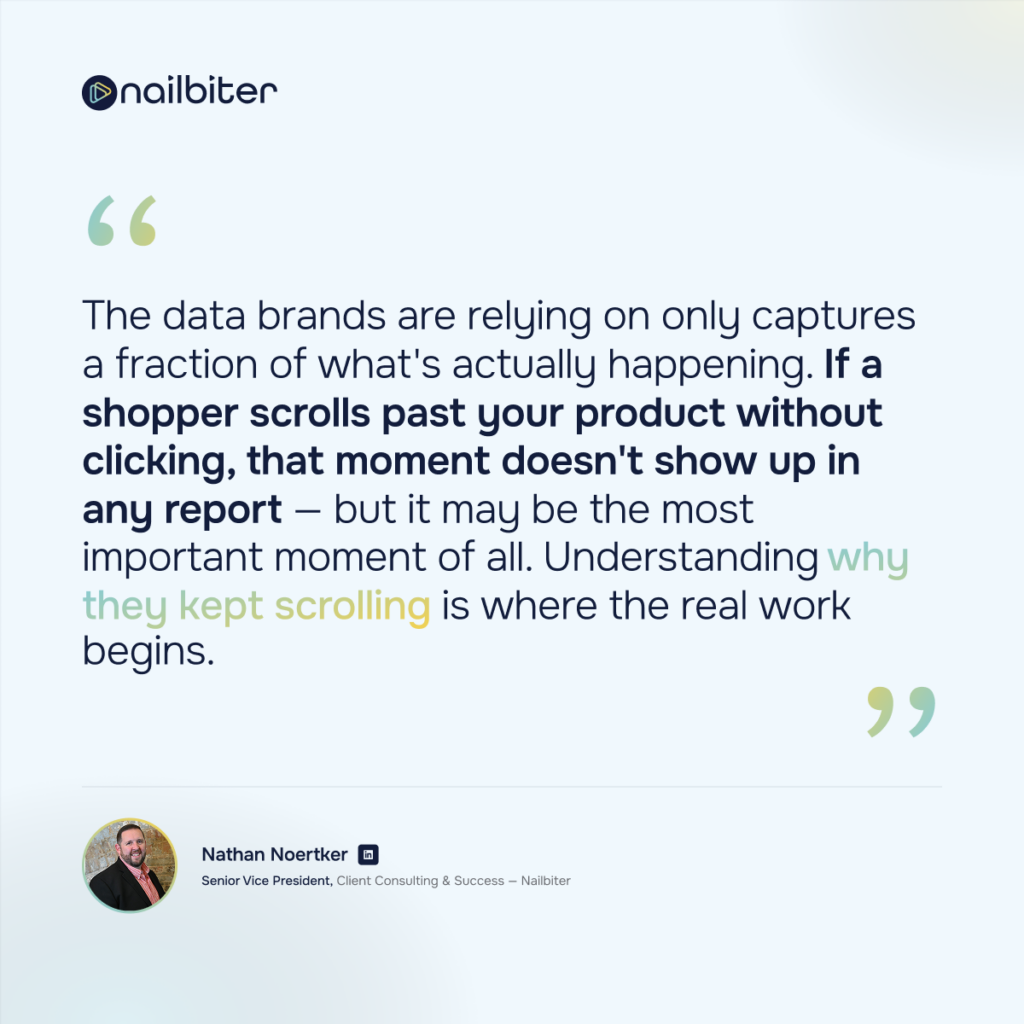
Understanding the “what” without the “why” is like reading the final score of a game without watching a single play. You know who won. You have no idea how or what to do differently next time.
When In-Store Strength Doesn’t Travel Online
Consider a well-known personal brand, a category leader built on decades of trust, strong retail placement, and loyal shoppers. In-store, they win consistently. Online, challenger brands with sharper claims, cleaner iconography, and more direct messaging are outperforming them at the point of digital decision. The trust equity that drives in-store purchases isn’t translating to a screen where shoppers scroll quickly and decide in seconds.
The same dynamic plays out differently in food and beverage. A snack or beverage brand that wins in-store with bold packaging and strong shelf placement can find itself losing online to smaller brands leading with ingredient transparency, cleaner labels, and values-forward messaging that resonates in a scroll environment. Shoppers browsing Walmart.com or Amazon aren’t in a store environment, being influenced by shelf presence and brand authority. They’re scrolling through reviews, watching short videos, and trusting what feels real over what looks curated.
These aren’t edge cases. They’re a pattern. The pattern reveals something important. The behaviors, preferences, and decision drivers that define the shopper online can be fundamentally different from those that drive them in a physical aisle, even when it’s the same shopper.
The Channel Layer Makes It Even More Specific
Layer the retailer dynamic on top of all of this, and the complexity deepens. A brand’s optimal content strategy on Amazon may not be the right approach on Instacart, where shopping occasions are often more habitual and time-pressured. TikTok Shop introduces an entertainment dimension that changes what captures attention entirely. Walmart.com shoppers bring a different value orientation than the same category shopper on a specialty platform. The playbook shifts, sometimes significantly, depending on where the shopper is and what they came to do.
This is how specific it has to get. Broad optimization thinking, the kind built on aggregate data and general best practices, leaves enormous opportunity on the table.
What Actually Moves the Needle
What brands need is the ability to hear directly from shoppers at the moment of decision. Not what they claim to prefer in a survey, not what they recall in a focus group, but what they actually notice, what they think about, and why they Cart a product or keep scrolling. That level of behavioral understanding, captured at scale across channels, categories, and competitive sets, is what makes a real optimization strategy possible.
It’s also what makes category innovation possible. When you understand not just who’s winning in your category but why certain shoppers feel like no brand is really speaking to them, you see the white space before a competitor does.
The brands that will define the next era of e-commerce won’t be the ones with the biggest budgets or the most well-known names. They’ll be the ones that understand their shopper’s specific decision moment well enough to show up exactly right, in the right place, with the right message, at the right time. That requires a different kind of intelligence than what most dashboards can provide.
That’s the playbook worth building.