
Most new product failures do not start as bad ideas. They start as good ideas evaluated by a broken process.
A concept tests well. The scores clear every internal benchmark. The team gets the green light, the product launches, and six months later it is quietly pulled from shelf. Nobody can say exactly why. The research said yes. The shopper said no.
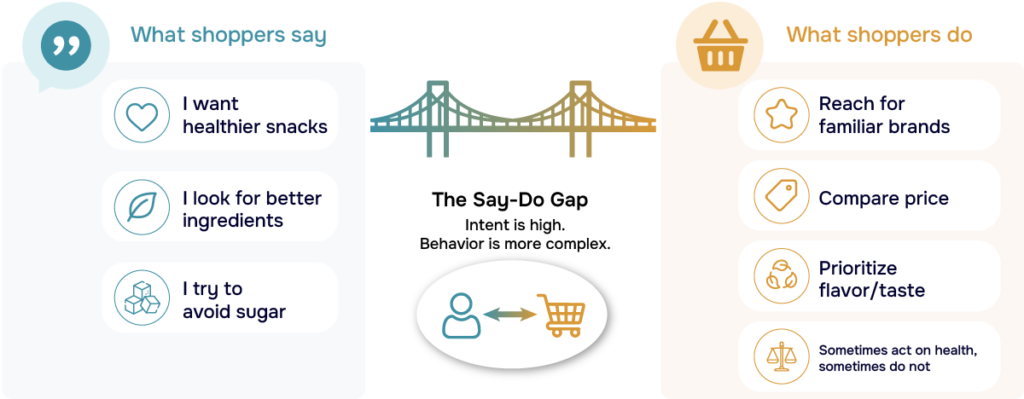
That gap between what people say in a concept test and what they actually do at shelf is not a small crack in the system. It is the system.
The Problem: Slow, Rigid, and Stated
The traditional CPG innovation process has not changed much in decades, and it is failing brands in three specific ways.
It is slow. Innovation is a first-to-market game. The brand that gets there first with something genuinely new wins the shelf and the story. The second or third brand to arrive is just a me-too product, no matter how good the idea was. A process that takes months to move a concept from idea to shelf gives competitors time to get there first, and it gives trends time to pass a brand by entirely.
It is rigid. Most clients operate inside strict stage-gate systems, where a concept has to clear every checkpoint to move forward. That approach is built for pass or fail decisions, not for improvement. A concept that is 80 percent of the way to working gets killed instead of optimized, because the process was never designed to ask “what would make this work,” only “does this work as is.”
It is stated. Traditional concept testing asks people what they think of an idea on a board, in a vacuum, disconnected from the shelf, the price, the competitive set, and the packaging they would actually see in a store. People are not lying when they answer those surveys. They simply do not have access to the context that would shape their real decision, so their answer reflects a hypothetical, not a purchase.
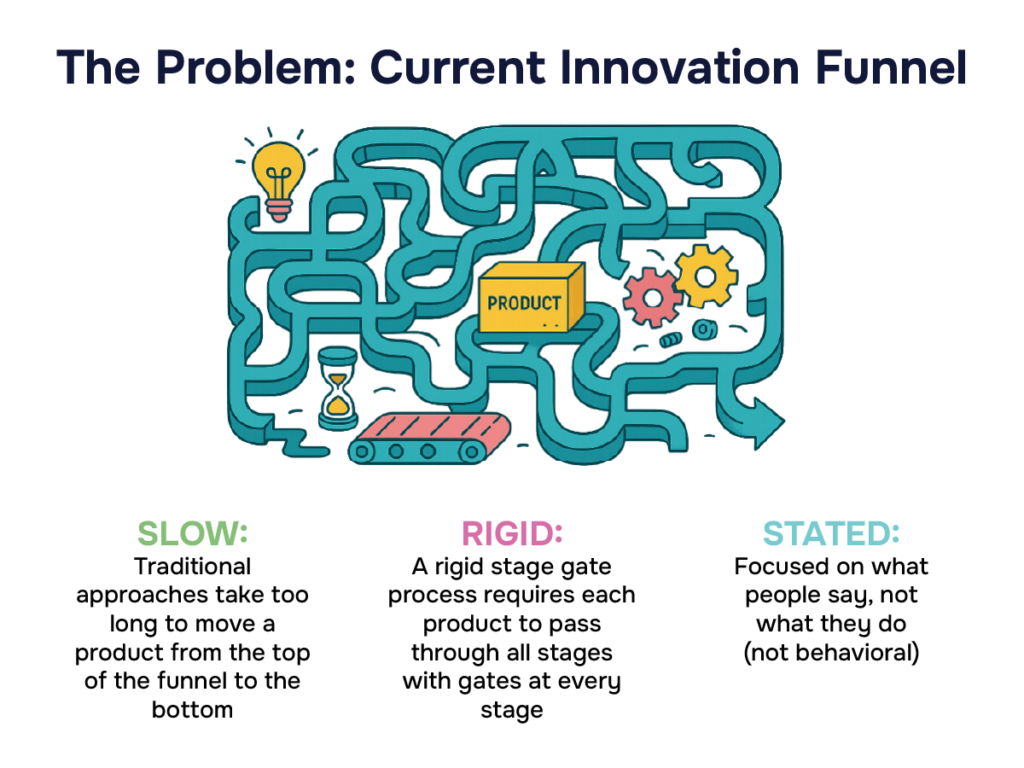
Put those three problems together and a client is left running the same methodological playbook they have used for 15 to 20 years, while the market around them moves every year.
The Shift: What Consumer-Led Innovation Actually Means
Consumer-led innovation replaces or supplements that stated feedback with observed behavior, captured in the real Moment of Truth, on video.
Instead of asking a shopper what they think a product looks like on a shelf, this approach puts them in the aisle, next to the competitors they would really be choosing from, and records what they notice, what they pick up, and what they say out loud while they are deciding. Instead of asking someone to imagine trying a product, it asks them to buy it, use it at home, and record their honest reaction afterward.
The difference is not a matter of degree. It is a different category of information.
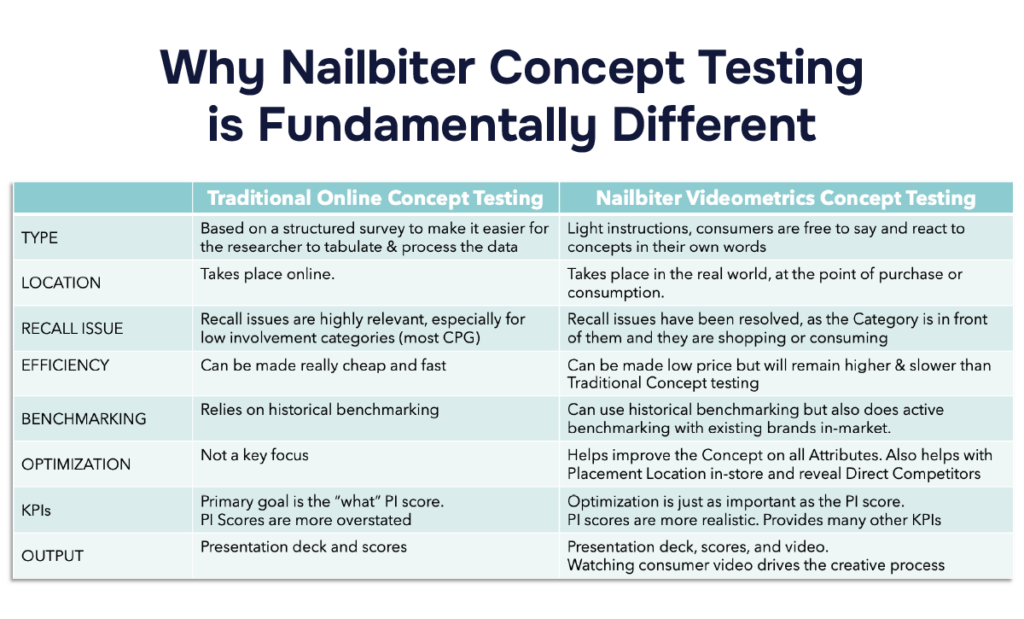
That last row matters more than it looks. A purchase intent score tells a brand team whether an idea worked. A video of a real shopper hesitating in front of a shelf, then explaining out loud why they picked a competitor instead, tells the team what to change. One is a grade. The other is a diagnosis.
How It Works Across the Innovation Funnel
Consumer-led innovation is not one test. It is a set of tools that can plug into different points of the funnel, depending on where a brand needs the most help.
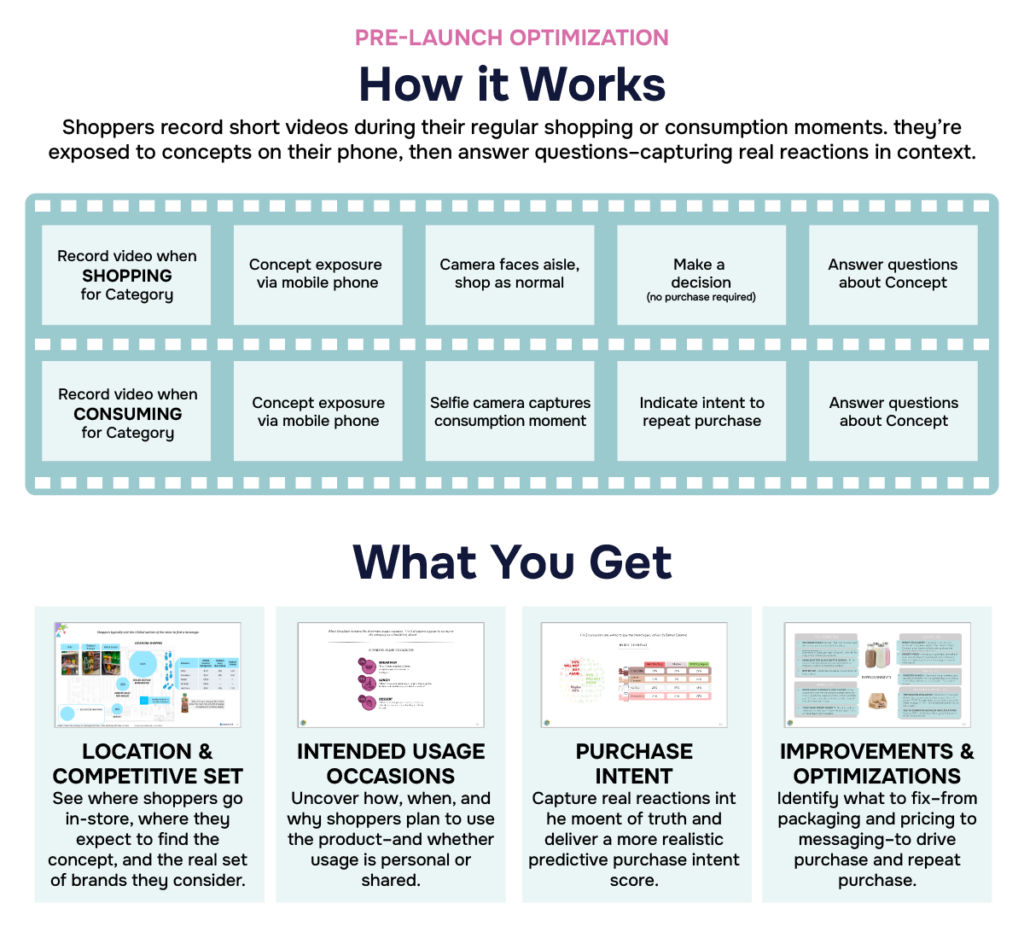
Pre-Launch Optimization
Before a concept ever reaches a test store, it can be exposed to real shoppers during their normal shopping trip. A shopper records video as they shop the category as they normally would, gets shown the new concept on their phone, and reacts to it on the spot, with the same brands and prices in front of them that would normally drive their decision.
This step surfaces four things a concept board alone cannot: where shoppers expect to find the product on shelf, who they actually consider buying instead, how they plan to use the product, and a purchase intent score that reflects real shelf context instead of a hypothetical.
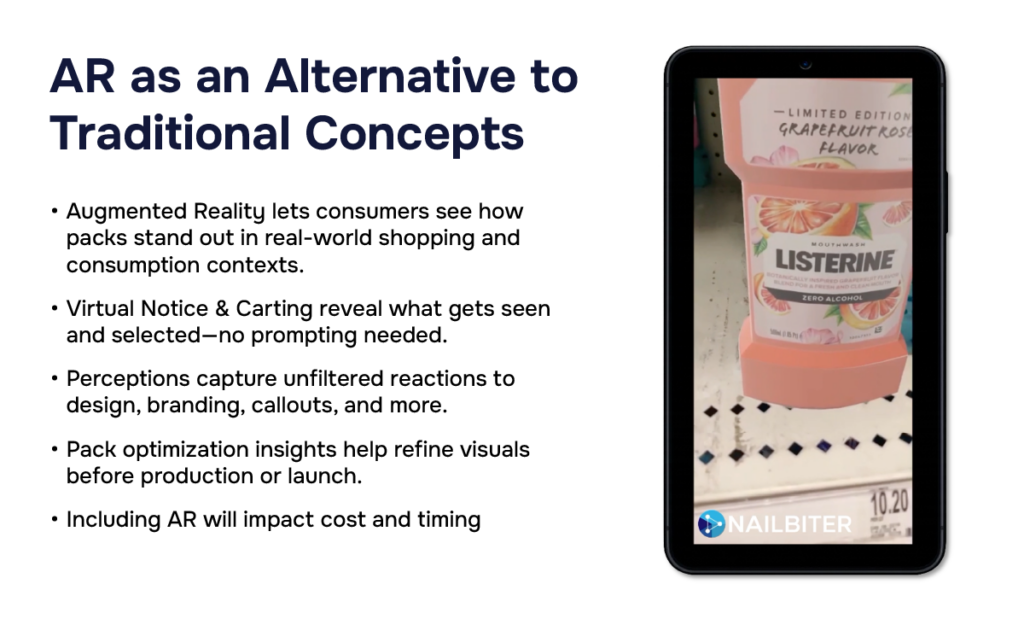
For teams who want to go further, an augmented reality layer can show how a pack performs against competitors before it is ever produced, capturing what shoppers notice, what they would put in a cart, and their unfiltered reaction to the design.
Pre-Launch Predictive Testing
Optimization answers whether a concept works. The next stage of the funnel answers a different question: once this concept is closer to finished, will it actually perform once it is live? This step puts shoppers in front of a realistic virtual shelf, or in an actual test store, and captures their first reaction, the First Moment of Truth, before the product ever goes to national distribution.
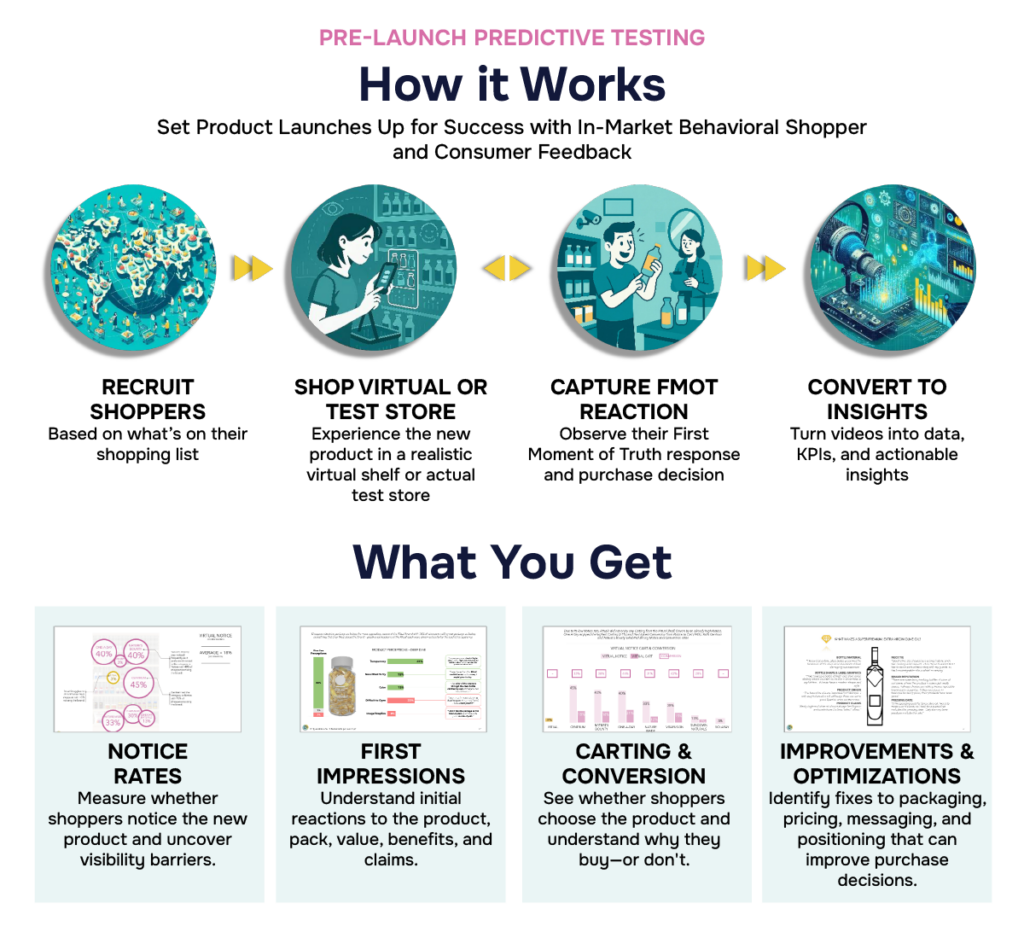
This is the step that catches problems while there is still time to fix them cheaply, before a full launch has already committed the marketing budget and shelf space.
Post-Launch Performance Tracking
Once a product clears both pre-launch stages and actually reaches shelf, the work is not finished. This is the stage where consumer-led innovation began as a discipline, and it remains the most established use case. A four-part research process including
survey, unaided video, aided video, and consumption video, tracks a product from initial awareness through repeat purchase intent.
Unaided video captures a shopper shopping the category naturally, with no prompting, revealing what they genuinely notice on shelf. Aided video then prompts a direct evaluation of the new product against named competitors. Consumption video asks the shopper to buy the product, try it at home, and record an honest reaction, which is where a brand learns whether trial will turn into repeat purchase.
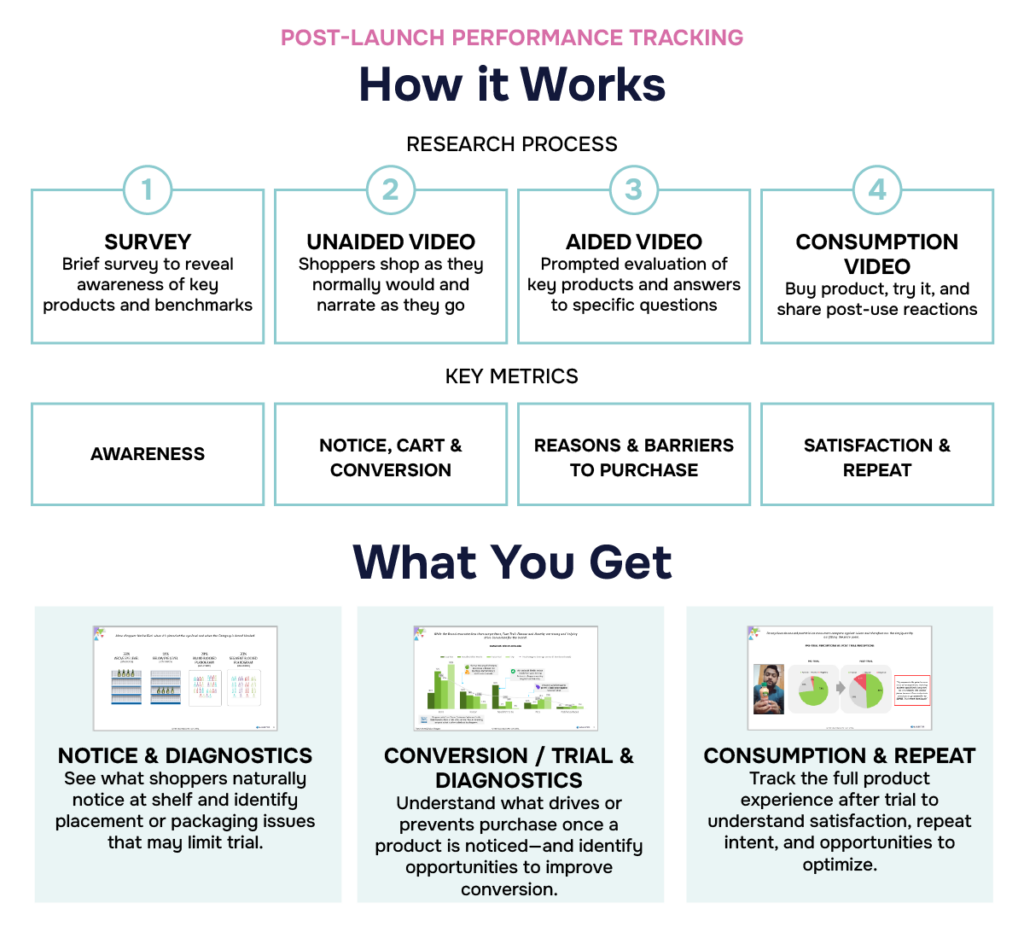
Many launches are tracked closely right up to the day they hit shelf, then left alone. That is a missed opportunity. The first few weeks on shelf are often where the clearest signal on what is working, and what is quietly failing, actually shows up.
Here is what that signal caught in practice.
Proof It Works
In 2018, we presented a case study with Mars on Orbit White at the IIEX conference in Chicago. The behavioral data showed that Orbit White’s underperformance was not a product problem. It was a packaging problem, specifically low Notice on shelf. The pack was not clearly communicating the attributes that would have driven a shopper to pick it up. Once Mars made changes to the packaging based on that diagnosis, Notice rates and product performance both improved.
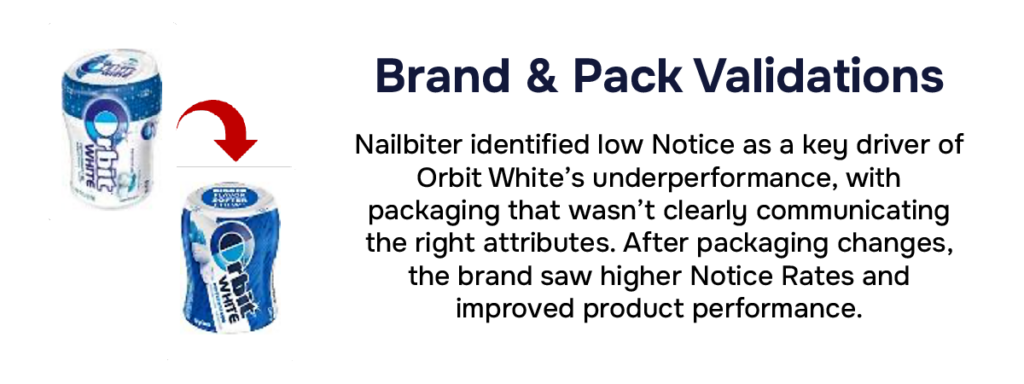 That is the pattern consumer-led innovation is built to catch. A traditional concept test would likely have scored Orbit White reasonably well on paper. Only real shoppers, in a real aisle, revealed the actual issue.
The same approach now operates at scale with brands like PepsiCo, where Nailbiter tracks every new product launch as a standing part of their innovation process, rather than a one-time study. That is the version of this partnership most brands should be aiming for: not a single test, but an ongoing system for making fewer bad launch decisions.
Why This Matters for Your Next Launch
Slow, rigid, and stated is not a description of a research method. It is a description of risk. Every month a concept spends moving through an outdated funnel is a month a competitor could close the gap. Every idea killed by a strict pass-or-fail gate might have been one small packaging fix away from working. Every purchase intent score built on a hypothetical concept board is a number a team is trusting more than it should.
A consumer-led approach does not have to replace an entire innovation process overnight. It can plug into pre-launch optimization, pre-launch prediction, post-launch tracking, or all three, depending on where a brand is bleeding the most opportunity right now.
The brands that figure out what actually drives Notice, Cart, and Conversion in their specific category, at their specific retailers, are the ones who stop guessing and start winning at shelf.
Frequently Asked Questions
Answer: Traditional concept tests measure what people say about a hypothetical product on a screen. They do not account for the real shelf, the real competitive set, or the real price a shopper sees in store. A concept can score well in a vacuum and still lose at shelf, because the vacuum is not where the purchase decision actually happens.
Answer: Rigid stage-gate systems are built to pass or fail an idea, not diagnose it. Behavioral testing that observes real shoppers reacting to a concept in context can pinpoint whether the issue is Notice, packaging, price, or positioning, turning a kill decision into an optimization plan.
Answer: What shoppers say reflects how they think they would behave under ideal conditions. What they do reflects the real shelf, real distractions, real competitors standing next to your product, and real price sensitivity in the moment. The two frequently do not match, and the gap between them is usually where a launch goes wrong.
Answer: Notice rate is the clearest signal. If shoppers are not noticing a product on shelf in the first place, no amount of formula improvement or marketing spend downstream will fix the problem, because the product never gets a fair chance to be considered.
Answer: Yes. Behavioral testing built around real shopping trips and real consumption moments can typically turn results around in two to four weeks from fielding, depending on scope, which is considerably faster than a traditional multi-stage testing cycle.
Answer: Pre-launch predictive testing, using either a realistic virtual shelf or an actual test store, captures a shopper’s first reaction to a nearly finished product before it reaches national distribution, giving a brand a real signal on in-market performance while there is still time to make changes.
Answer: No. This kind of testing is built to plug into a single stage of an existing process, whether that is early concept optimization, pre-launch prediction, or post-launch tracking, rather than requiring a brand to overhaul its entire innovation system at once.