
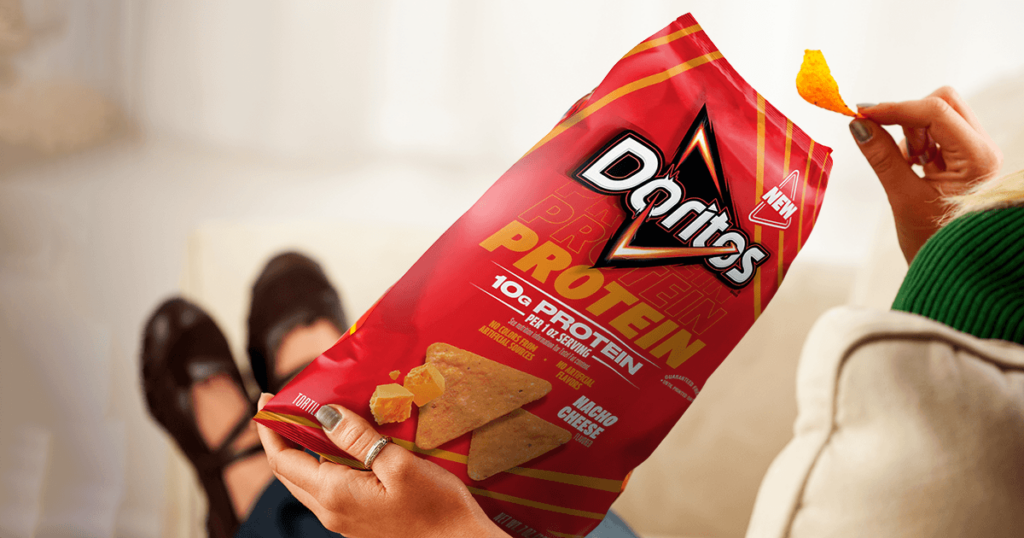
The protein trend is not subtle. 86% of Americans are actively adding protein to their diets, and 70% want salty snacks to deliver it*. PepsiCo Foods North America saw that signal and made a bold move — going “all in” on protein chips. But wanting protein and buying a protein chip are two very different things, and the gap between the two is exactly where the work happens. We’ve been given the opportunity to share this rare, real-world case study in how behavioral research, not survey data or focus groups, drove the decisions that shaped a major product launch.
The core argument at the center of the work is one we have long championed, and that is what consumers say does not always align with what they do. Shoppers rationalize. They recall imperfectly. They tell you what sounds right, not what actually drives them to reach for a product. That gap is costly when it goes unmeasured, and PepsiCo wasn’t willing to launch a new platform without closing it. The decision to partner with Nailbiter was a decision to ground every major launch question in observed behavior.
The research ran across three phases, each targeting a distinct decision point. Concept testing at shelf puts the prototype directly in front of shoppers via mobile video, capturing real-time reactions to the product as it would actually appear in the aisle. One finding that emerged was immediately actionable: shoppers expected to find the product in the regular Doritos take-home section, but felt the pack didn’t differentiate itself enough from core Doritos. That kind of feedback — specific, visual, grounded in the moment of truth — is exactly what traditional research tends to miss. A shopper standing in an aisle doesn’t give you a clean survey response. They give you a split-second reaction, and that reaction tells you something a questionnaire never will.
Willingness-to-pay testing came next, and the results here were significant. Multiple behavioral indicators gave PepsiCo confidence that the protein benefit could support a higher price point at launch. Shoppers were already benchmarking Doritos Protein against Quest, a brand that commands $8 to $10 for a smaller bag. The perceived value proposition was strong, and the data backed it up with price elasticity scores across six tested price points. Knowing that, going into launch rather than discovering it after the fact, is the kind of intelligence that changes how a brand goes to market.
The third phase, a home use test, addressed the question that ultimately determines whether a better-for-you product has staying power. We asked, “Does the taste hold up?” Doritos Protein delivered. Post-trial taste ratings climbed from pre-trial expectations, and over nine in ten consumers reported satisfaction with protein content across both Doritos and Quest. The fact that Doritos’ lower protein count (10g versus Quest’s 16g) didn’t erode satisfaction speaks directly to the power of the Doritos flavor equity. Behavioral research captured that verdict in real time, not as a recalled opinion weeks later.
What made this case study worth presenting to colleagues wasn’t just the findings; it was the framework. Nailbiter and PepsiCo have continually demonstrated a research model that follows innovation from early concept screening through pre-market shelf testing to post-launch tracking. Each phase builds on the last. The in-store pre-market test informs placement and packaging. The willingness-to-pay data shapes pricing strategy. The home use test confirms taste claims. And replicating the same test after launch creates a benchmark for ongoing performance. It’s a closed loop, not a one-time snapshot.
At Nailbiter, we believe the brands that win aren’t the ones with the biggest research budgets — they’re the ones asking better questions at the right moments. PepsiCo went “all in” on protein chips because they did the behavioral work to know the bet was worth making. That’s what good research actually looks like.
Want to see the deck and talk more about what videometrics can do for your brand?
*Source: https://www.usatoday.com/story/money/food/2026/02/26/doritos-protein-chips/88845377007/